
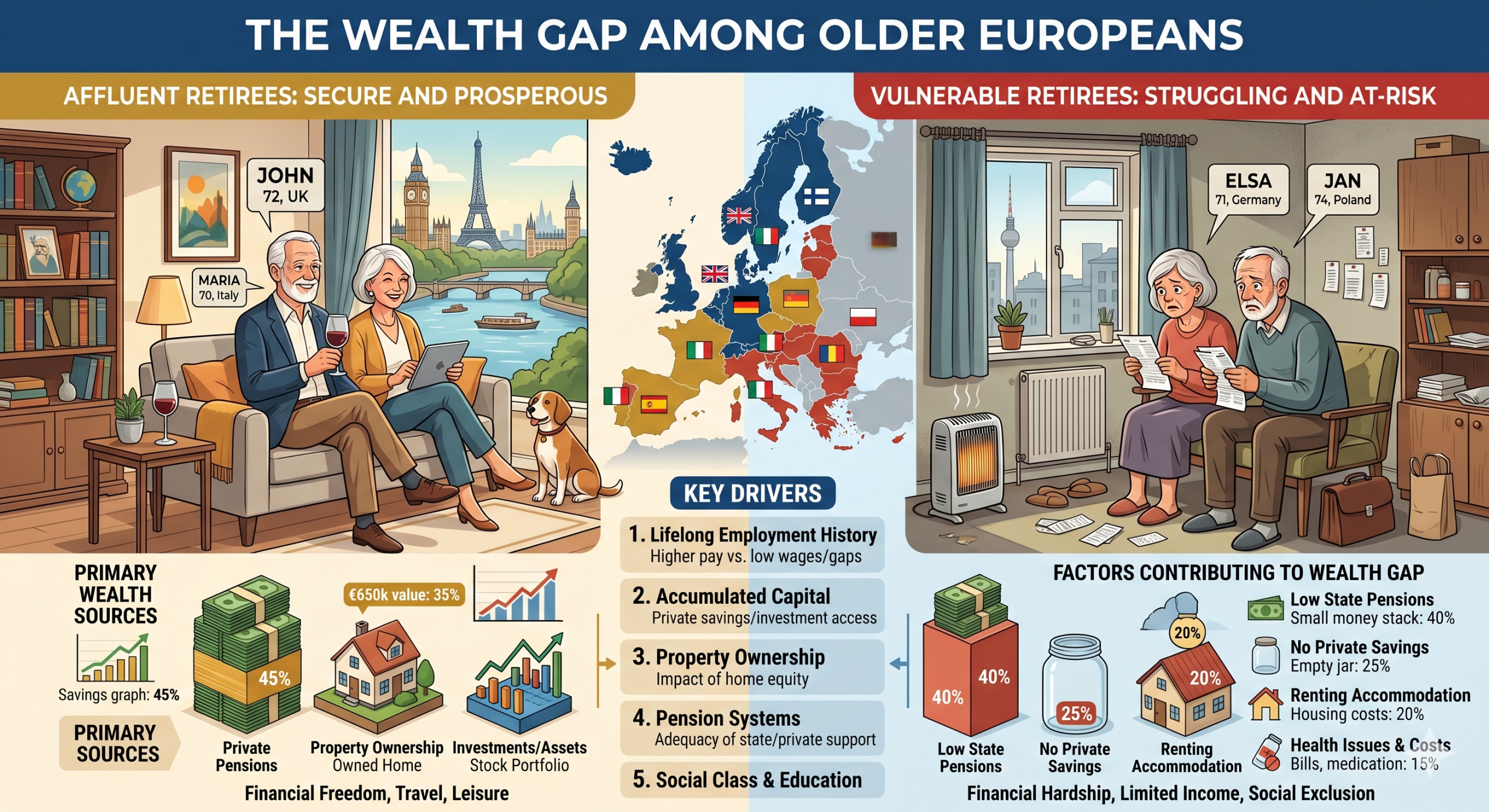
Across Europe, people approaching retirement often share similar concerns: maintaining financial stability, managing living costs, and preparing for the years ahead. Yet beneath these common challenges lies a striking reality—wealth among older Europeans is distributed very unevenly.
Research from various European institutions has consistently shown that household wealth can vary dramatically between countries, regions, and even neighboring communities. Factors such as homeownership, pension systems, inheritance patterns, and career opportunities have contributed to significant differences in financial outcomes later in life.
Homeownership Remains a Major Divider
One of the largest contributors to wealth differences among older Europeans is property ownership.
Many retirees who purchased homes decades ago have benefited from long-term property appreciation. In some regions, rising real estate values have substantially increased household net worth over time.
Others, however, spent much of their working lives renting or faced housing markets that made ownership difficult. As a result, they may enter retirement with fewer assets despite having similar employment histories.
The contrast can be substantial. Two individuals with comparable careers may have very different financial positions depending on whether they accumulated property wealth over several decades.
Pension Systems Vary Across Europe
Retirement income also differs significantly between countries.
Some European nations operate extensive public pension systems designed to provide a relatively stable retirement income. Others rely more heavily on occupational pensions or personal savings.
As populations age and demographic pressures increase, policymakers continue to evaluate how pension systems can remain sustainable while supporting future retirees.
For older adults, understanding available benefits and retirement resources has become increasingly important as economic conditions evolve.
The Role of Inheritance
Family wealth often plays a significant role in long-term financial outcomes.
Inherited property, savings, or investments can provide a financial foundation that may take decades to build independently. In some cases, intergenerational wealth transfers have widened existing financial differences between households.
Economists frequently note that inheritance has become an increasingly important factor in explaining wealth distribution across developed economies.
While not every family passes on substantial assets, inheritance can influence housing opportunities, education access, and retirement security.
Regional Differences Matter
The wealth gap is not only visible between countries—it can also be seen within them.
Urban centers with strong economic growth may offer higher incomes and greater asset appreciation. Meanwhile, rural areas or regions experiencing slower growth often face different economic realities.
This means that retirement experiences can vary significantly depending on where people have lived and worked throughout their lives.
Rising Living Costs Create New Challenges
Many older Europeans are adapting to changing economic conditions, including fluctuations in housing, energy, healthcare, and everyday expenses.
Individuals with substantial savings or diversified assets may have more flexibility when managing these costs. Others may rely primarily on fixed retirement income, making budgeting and financial planning especially important.
As a result, financial education and access to reliable information are becoming increasingly relevant topics for households preparing for retirement.
Looking Ahead
Europe’s aging population continues to reshape conversations around wealth, retirement, and economic opportunity.
While some older Europeans have accumulated significant assets through property ownership, long careers, or inheritance, others face retirement with more limited financial resources. These differences highlight the complex factors that influence wealth over a lifetime.
Understanding how housing, pensions, savings, and broader economic trends interact can help individuals make more informed decisions about long-term financial planning.
Conclusion
The wealth gap among older Europeans reflects decades of economic, social, and demographic change. Although experiences differ widely, one thing remains clear: retirement outcomes are shaped by a combination of personal circumstances, public policy, and broader market conditions.
As discussions about retirement security continue across Europe, staying informed may help households better navigate the financial decisions that lie ahead.
Disclaimer: This article is provided for informational and educational purposes only. It does not constitute financial, investment, legal, or retirement advice. Individuals should conduct their own research and consult qualified professionals before making financial decisions.